THE PEDAGOGY OF THE POETIC BODY

If pedagogy is the art of transmission, is there an art of transmitting pedagogy?
Is there a pedagogy for pedagogy?
Or a pedagogue of pedagogues?

These questions are at the roots of the field of pedagogic training and all its variations: teacher training, mentoring, pedagogic supervision, pedagogic consulting, pedagogic assistance.
In this phase of my life and career, the transmission of the Pedagogy of the Poetic Body has become crucial. Not just the training of theatre practitioners, but the spreading of the vital principles of this practice.
I like to call my teaching work pedagogic practice. All practices can be trained, developed, elaborated, criticized, rejected, unfolded, transformed, evolved… composted in order to nurture new practices.

In the learning of a pedagogic practice, there are several phases.

The first one is when you learn a particular art from a teacher or a practitioner. In the moment you’re learning that art you’re also learning the way in which this teacher is transmitting the art. There is a direct mimesis between the teacher and the learner: what you learn includes the way you have learnt. And this includes the particular style of your teacher. Sometimes even some of their personality traits.

The second level of learning happens when as a teacher, you decide to teach that particular art or that particular subject and you learn from yourself what and how you want to teach. You learn from your findings and from your errors. You learn from your intuitions and from your questions. You learn from your excitement and from your fear. And you learn form your students: from their findings and from their feedback. And, most of all, your learn from the work itself: the Muses of theatre are always there, breathing in your breath.

Another level of learning happens if you share the teaching with a colleague and you co-create the work. A two-mind, two-heart, two-body pedagogic sonata. Or a pedagogic chorus if you work in a team.

The further level happens when you look for guidance in a training field with an elder teacher, whose task is specifically to nurture your pedagogic practice: your technique, your skills, your vision, your style and your awareness of it. In a learning chorus with other teachers in training.

If you’re interested in developing your practice as a teacher, pedagogue or theatre educator, or as an educator who uses theatre in their practice, in this website you can find several resources that can nurture your pedagogic work.
Some workshops and training are planned in the upcoming months.
And there are two new texts in the writings session. One on the evolution of Helikos Pedagogy and the other on the infamous “Via Negativa”, an ancient philosophical term often misused in the context of theatre pedagogy.

I wish you great inspirations and the blooming of many new synapses in your beautiful poetic brain.
ONLINE PRACTICE

ONLINE PRACTICE

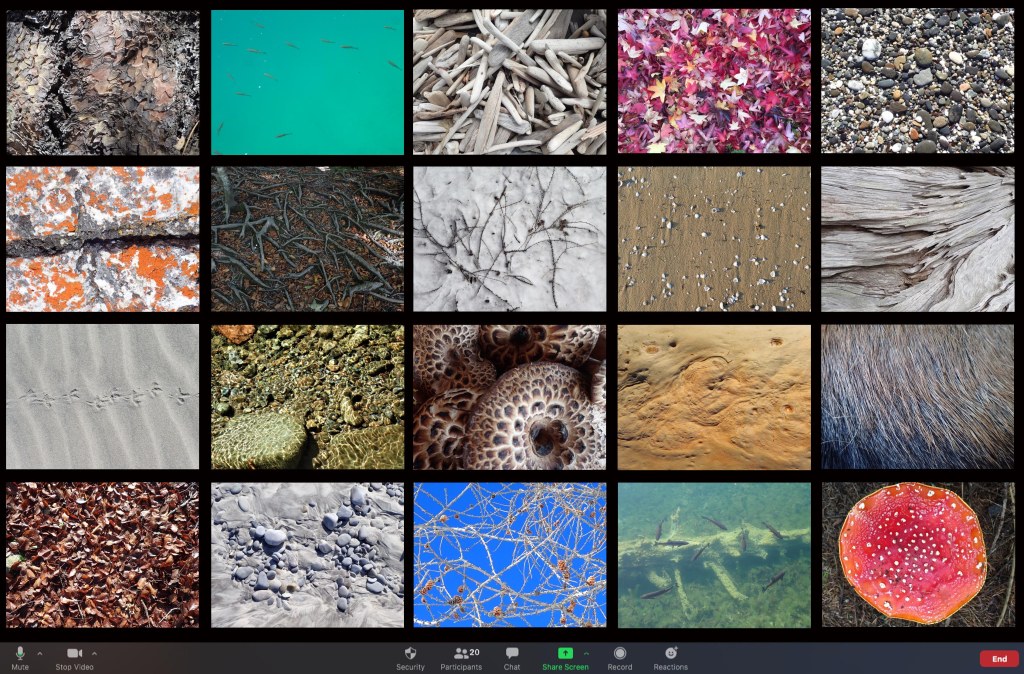
The essence of feedback is in recognizing patterns
and bringing them into awareness
The art of describing forms as they manifest
Rigorous, empathic and poetic phenomenology
Forms are Masks, Masks are Forms

Figures emerging from the background
Masks are three-dimensional
at least
And so is theater
A screen is a bi-dimensional landscape

A space of longing
An echo of the poetic space
A surrogate, a memory, a survival raft

I don’t teach physical theater on-line. I find that it is not a viable way to initiate new students to this art, to this work, to play.
I have written a post to unfold the reasons behind my choice. You can find it in the Blog of this website.

There is no such a thing as Virtual Physical Theater. There is on-line performance, and I am not interested nor skilled at it, so I cannot teach it. In the words of my colleague and friend Amy Russell, if there is no shared space and shared time, it is NOT theater. It is something else. It can be great, but it is not theater. And it is not my cup of tea, nor my glass of wine.

We all need to be careful with the words we use to describe the world. They create it. And they can damage it.

These are very difficult times, and live arts have been hit very hard by the pandemic. Many colleagues in the teaching field had no alternatives between going on-line and loosing their job. Others had long term programs to run, enrolled students to support, teaching staff to protect… Some very difficult choices needed to be taken. I feel for them.
I consider myself lucky to not having been in that situation. I am in the fortunate position in which I did not have a job to preserve. As a free-lance teacher and artist, I work but I do not have a job. I am subject to the seasons of nature and history. It is exciting and risky. I found this to be the operating mode that most serves the way I like to live and work.
When the pandemic hit, I turned off my calendar and I went on stand-by.
And I braced for this sudden Ice Age.

As everyone, I was fully unprepared to face this level of disruption. I had good harvests in the years before the pandemic and my living costs were low, so I could survive with my reserves and a strict diet.
But I miss the work tremendously, and the play, and the people, and the magnificent feeling of collective practice.
This is an exceptionally long and cold winter of the Live Arts. No outdoor gardening is possible and I need to keep practicing to maintain the fertility of the soil. Precious relationships need to be nurtured in whatever way is available. So I am exploring the possibilities offered by the online medium.

What I have discovered during these two years of pandemic, is that Zoom can be a greenhouse, or a nursery. Some gardening is possible. Some plants are actually doing OK, a few can even thrive. The remote connection can be a precious tool to maintain and cultivate relationships, to reflect on the work, to support each other emotionally, to refresh theoretical understanding, to review exercises. Some basic movement practices are possible, as well as some levels of writing and devising processes. And, of course, we can all prepare for the return to the fields.
It’s about keeping the fire alive, the soil worked, the seeds protected. And it can be very heartwarming, which is a priceless gift these days.

While collective work online is very seriously maimed, individual work maintains more potential. And it can operate as a an emergency channel. This damn pandemic eventually will end, and we will be grateful for the flames kept burning.

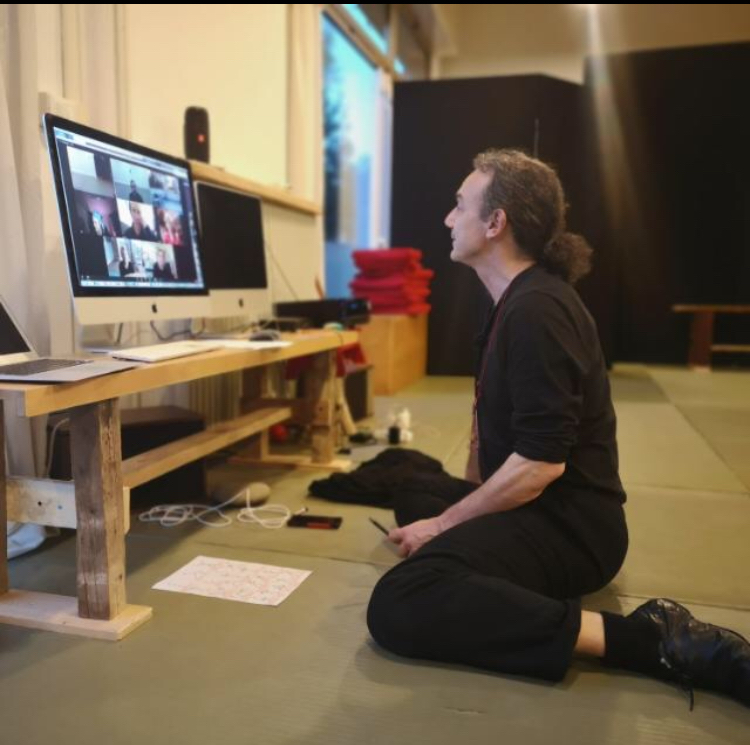
This is how Online Theater Pedagogy looks like.
The “pedagogy of the legless” in the words of Marcel Jousse


For all these reasons I prefer to call my work on-line PRACTICE, rather then teaching.
What I offer is

  • Individual consulting on devising projects
  • Individual pedagogic supervision or coaching
  • Pedagogic supervision in group
  • Theory classes and online conversations on specific subjects

I work only with practitioners with whom I have already worked and played in the context of live training, and who are active in the field. Or at least who have been active before the Covid storm.
If I don’t have already a preexisting embodied experience with a person and with their practice, I cannot establish a valid pedagogic engagement and relationship.

This is NOT the New Normal. It is a difficult, frustrating and challenging abnormal. In history, as in life, shit happens and this pandemic is a colossal one. Please remember and cultivate the longing for what we are missing and the grief for what has been lost. When this will be over, come back to the live poetic space wilder and more embodied than ever before. I’ll meet you there.


Giovanni Fusetti
January 202
2